Persistent organic loads
Black liquor, washings and wet-process effluent contain high COD and slowly biodegradable lignin and complex organics.
 GET A QUOTE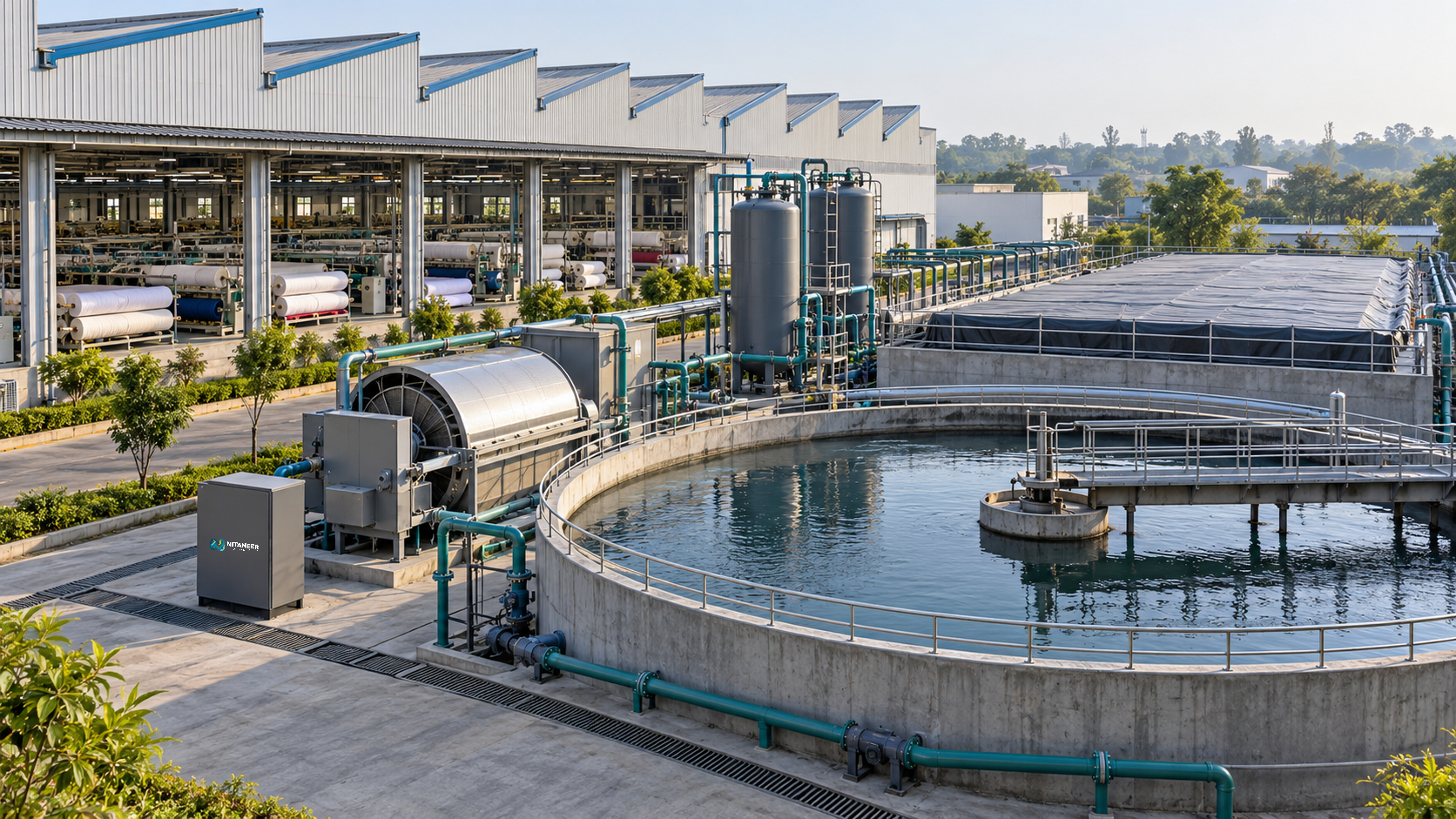
High-load treatment for fibres, colour, process chemicals and water-intensive manufacturing.
Pulping, paper production and textile wet processing create high-load wastewater containing fibres, colour, dyes and persistent process chemicals. Related leather processing adds chromium and sulfide streams that require dedicated handling.
Nitaneer combines mechanical separation, biological treatment and targeted physico-chemical polishing. Stream-specific treatment protects biological stages and supports membrane recovery and reuse in water-intensive manufacturing.
Black liquor, washings and wet-process effluent contain high COD and slowly biodegradable lignin and complex organics.
Dyes and sizing chemicals complicate treatment. Where leather streams are present, chromium and sulfides require segregation to protect biology and control gas formation.
Residual starches, defoamers and sizing agents can foul UF and RO. High-salinity concentrates need an integrated recovery route where ZLD is required.
Configured around the incoming stream, operating conditions and intended water use.
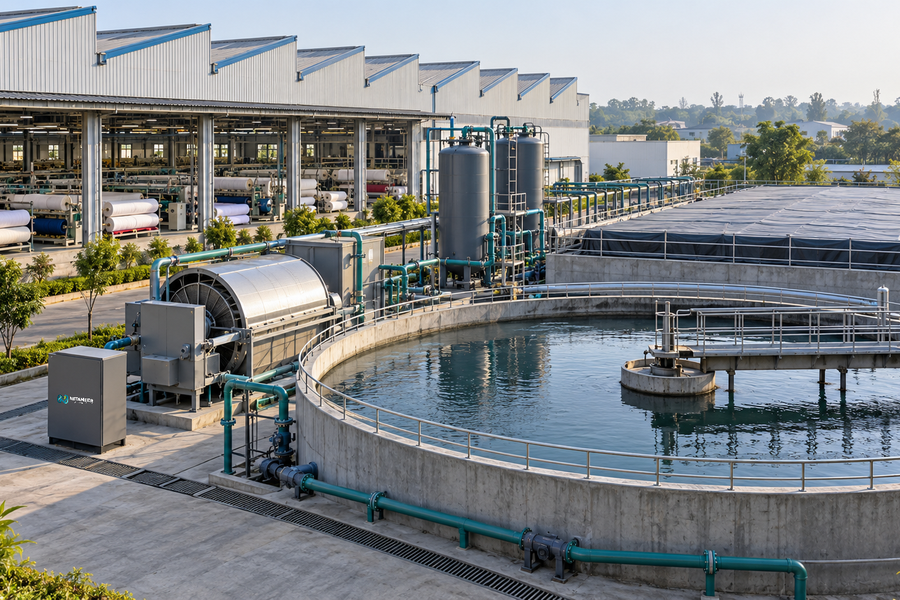
Fine screens, rotary drum filters, clarifiers and DAF capture light fibres and suspended matter before downstream stages.
Precipitation, azo-bond reduction, activated carbon and membranes address dyes. Segregated precipitation supports chromium recovery where tanning streams are involved.
UASB or EGSB reactors and aerobic stages address organic and nitrogen loads. Enclosed stages, off-gas extraction and scrubbing manage sulfide-related odors.
UF and multi-pass RO support process-water reuse and ZLD integration. Screw presses and solar-assisted drying provide sludge-management options.
Recover water for process reuse with polishing selected around the mill’s chemistry, colour sensitivity and dissolved-solids requirements.