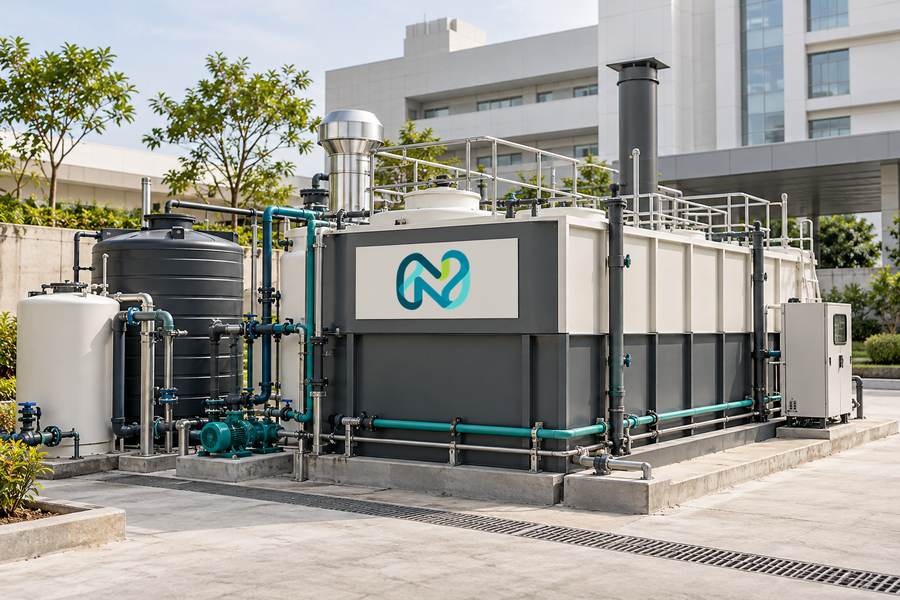
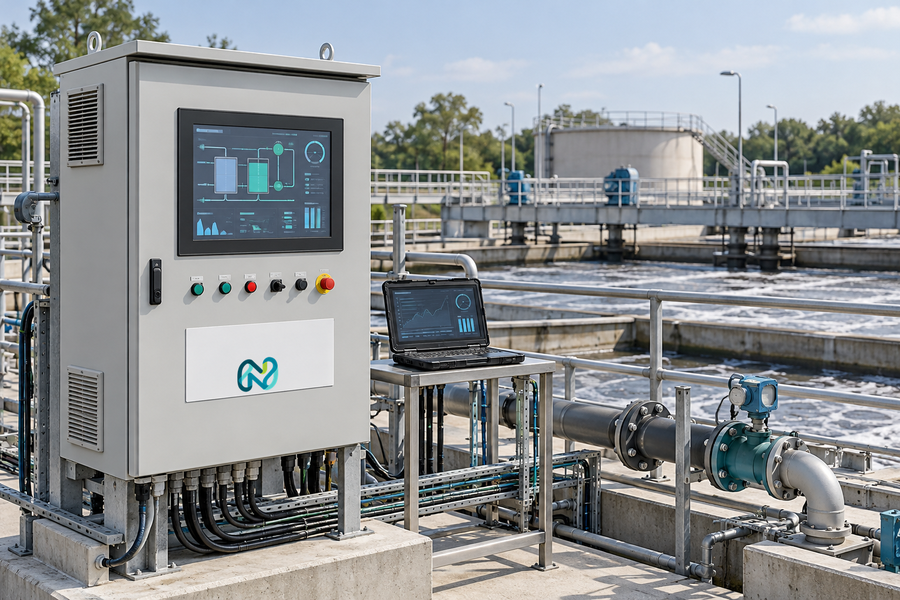
Start with wastewater analysis
Review flow, pH, COD, BOD, TSS, oil and grease, colour, composition, toxicity and metals before selecting equipment.
 GET A QUOTE
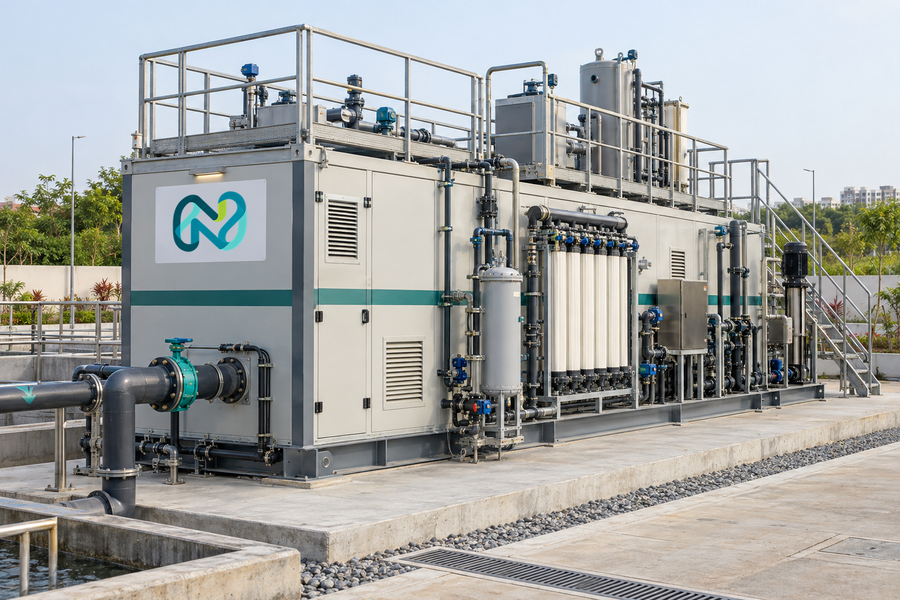
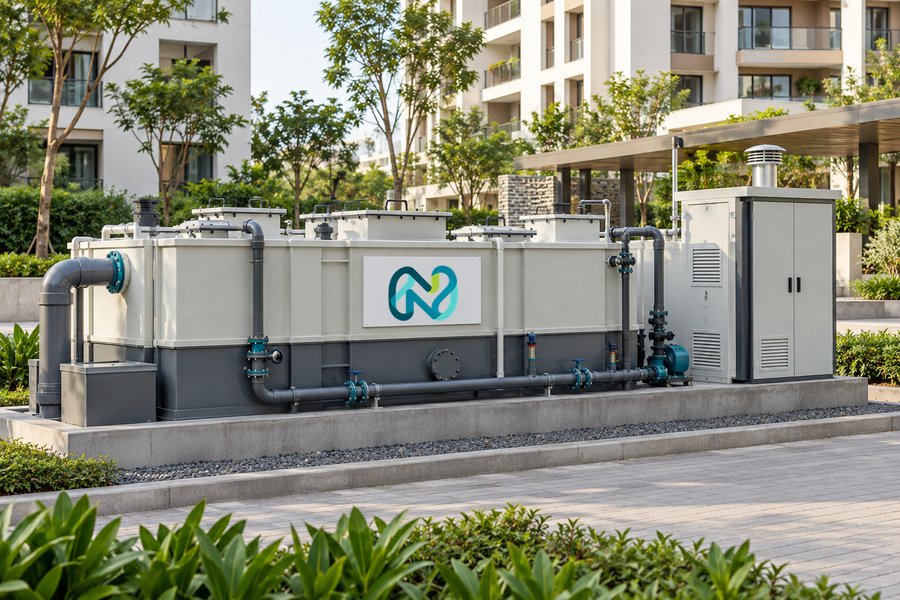
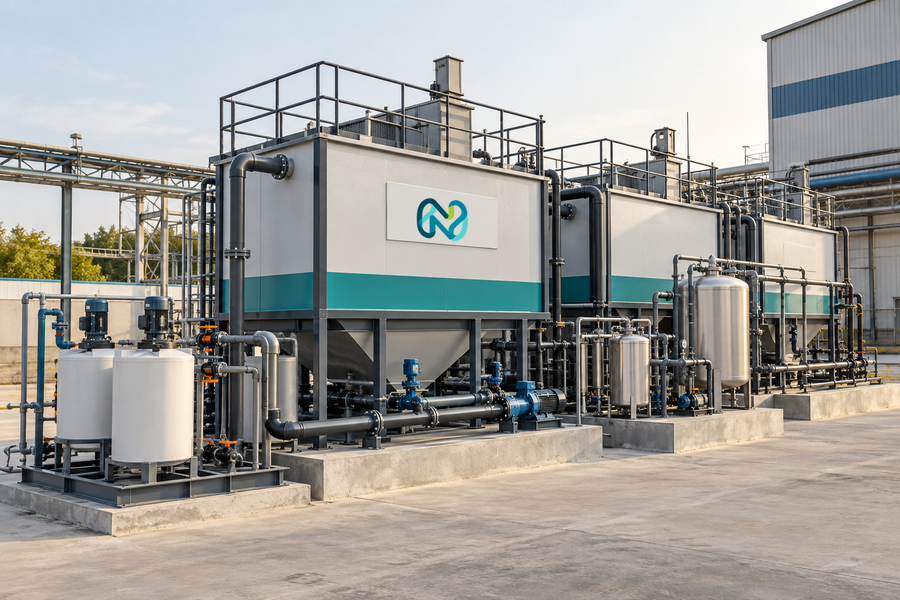
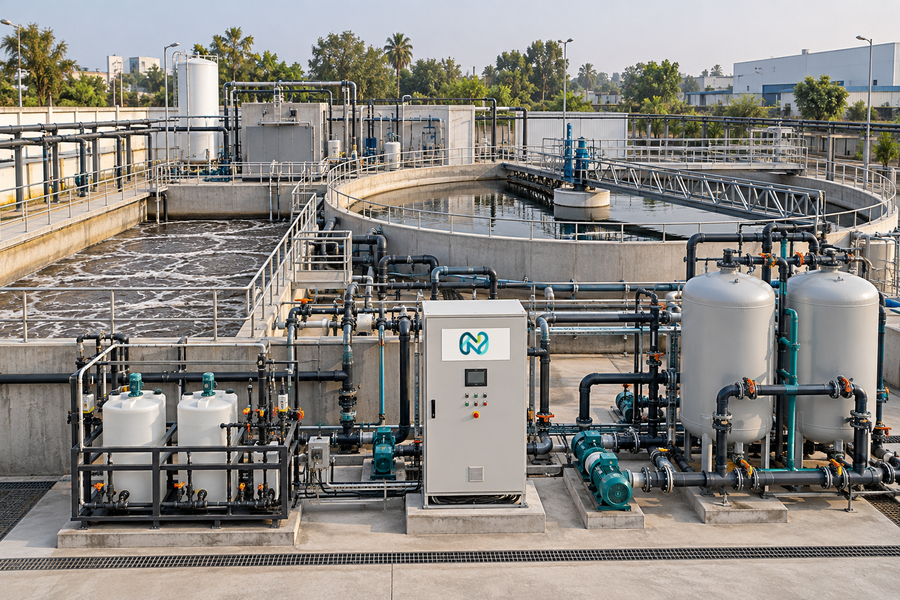
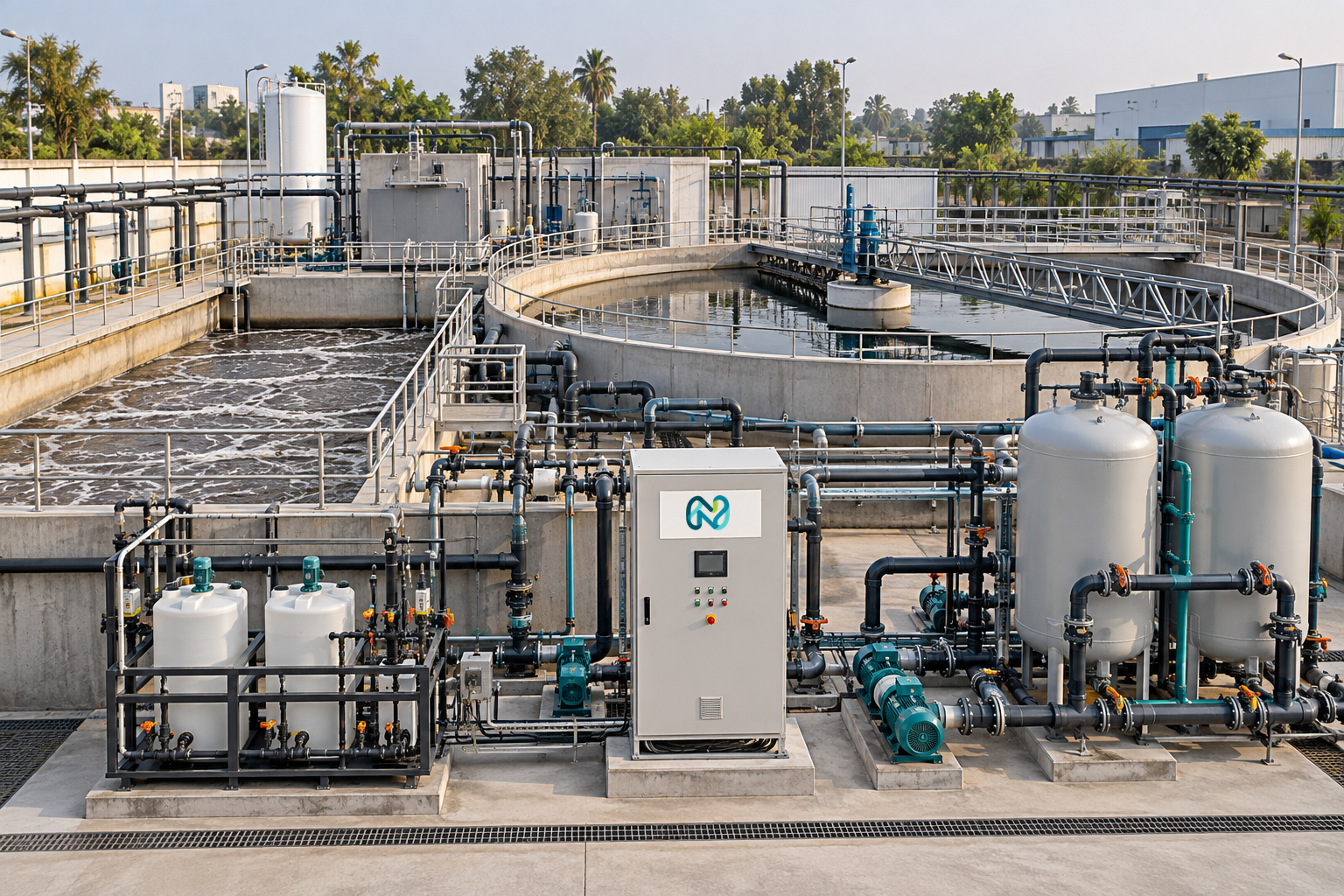 ILLUSTRATIVE SYSTEM / FINAL CONFIGURATION IS PROJECT-SPECIFIC
Industrial treatment trains selected around actual wastewater chemistry and the water-use objective.
Every factory’s wastewater is different. COD, BOD, suspended solids, oils, colour, chemicals, metals and acidic or alkaline streams all influence the treatment choices.
This ETP family focuses on the treatment process. Screening, equalization, chemical and biological stages are combined only where the effluent requires them. Discharge limits, reuse objectives and sludge handling shape the final engineering scope.
Indicative process stages. Select the required water-treatment steps; collect sludge from the stages that generate it.
Characterize and collect the actual wastewater stream.
Remove debris and larger floating or suspended material.
Balance flow and changes in pollutant loading.
Correct acidic or alkaline conditions where needed.
Select coagulation, flocculation or precipitation for the pollutants present.
Treat the biodegradable organic load where appropriate.
Separate suspended solids and treatment sludge.
Remove finer particles before further treatment.
Assess carbon, membranes, disinfection or reuse treatment as required.
Review flow, pH, COD, BOD, TSS, oil and grease, colour, composition, toxicity and metals before selecting equipment.
Neutralization, coagulation, flocculation and precipitation may address particular streams. Biological treatment targets the biodegradable organic fraction.
Filtration and advanced treatment options, including carbon, membranes or disinfection, are assessed against the intended discharge or reuse requirement.
Clarification and sludge handling are part of the process scope. Chemical use, solids generation and ongoing operating needs require project-specific evaluation.
The diagram is an indicative treatment sequence, not a prescribed train for every factory. Sludge management collects solids from relevant stages rather than acting as a final water-treatment stage. The source offers carbon-steel and 304 stainless-steel modular equipment options, but wastewater chemistry governs selection. Capacity, power, dosing, operating cost, quality and regulatory compliance require a technical proposal and commissioning verification.
Share the flow, wastewater analysis, site constraints and intended discharge or reuse objective.
DISCUSS YOUR PROJECT