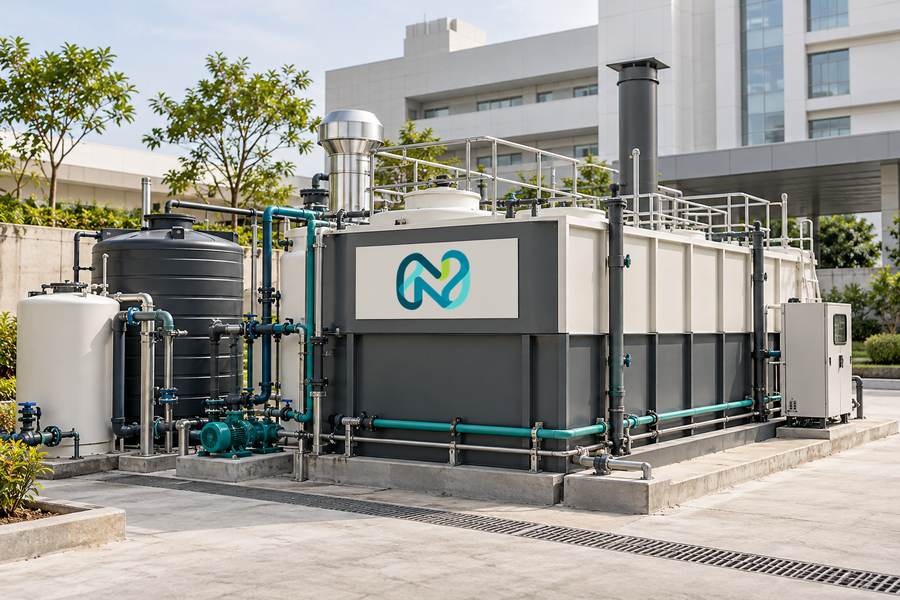
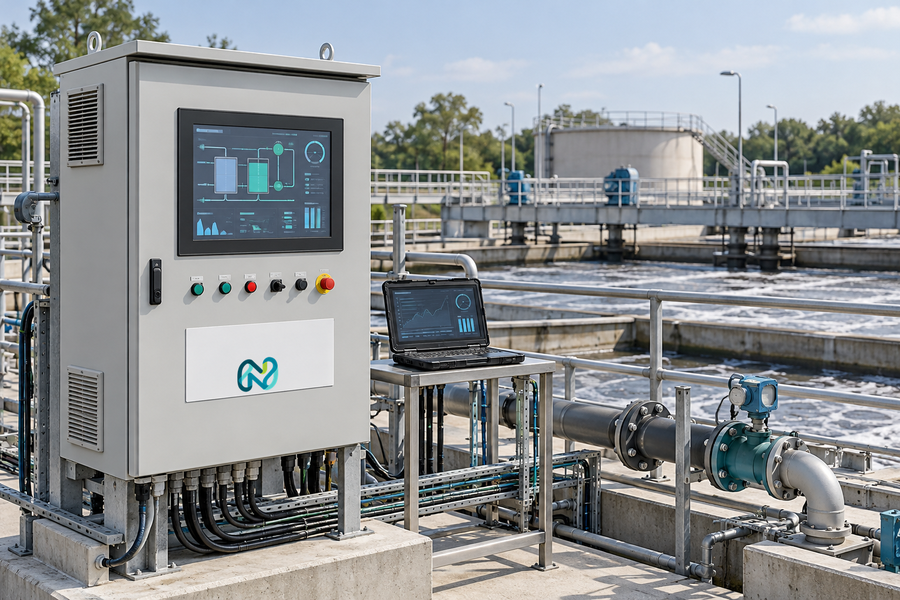
A complete operating circuit
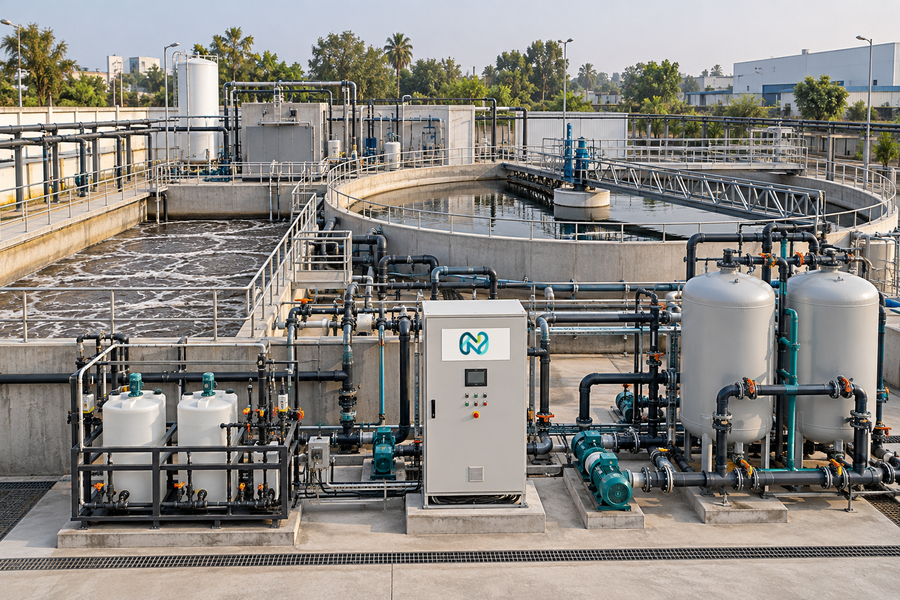
Aeration, nitrification-liquid return and sludge return work alongside membrane filtration. Final arrangement and return rates are selected for the project.
 GET A QUOTE
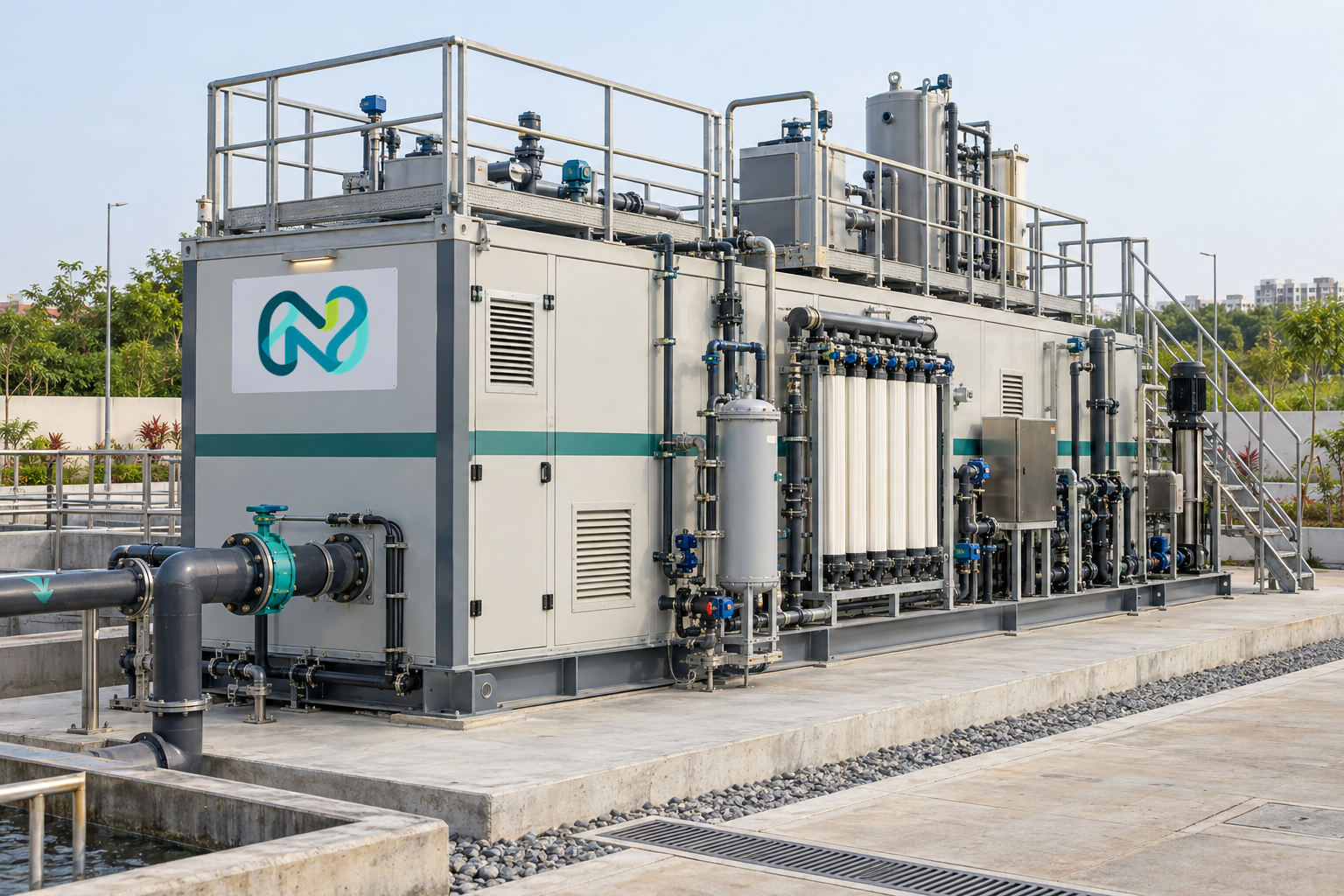 ILLUSTRATIVE SYSTEM / FINAL CONFIGURATION IS PROJECT-SPECIFIC
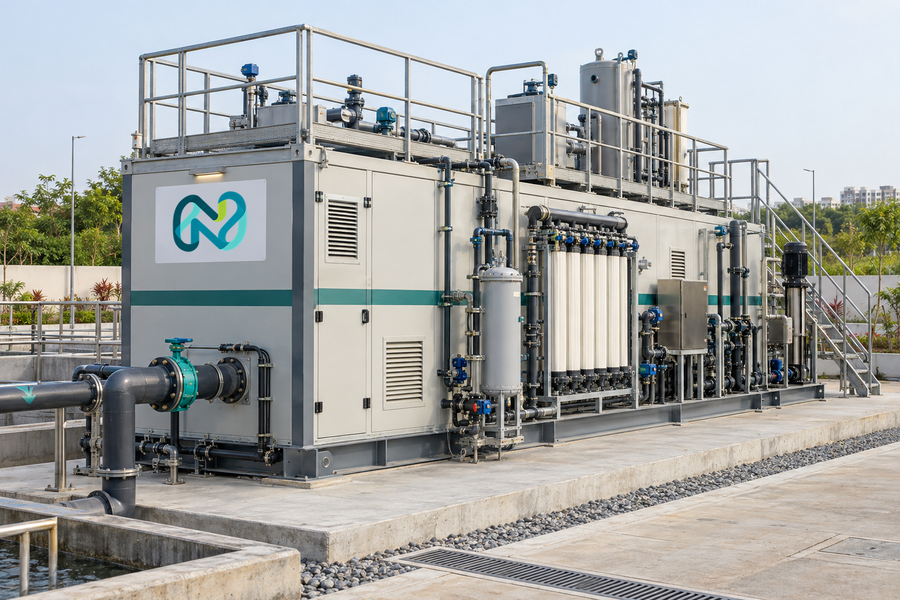
A compact containerized membrane bioreactor for sites that need integrated treatment in limited space.
QK-MBR combines biological wastewater treatment with membrane separation inside a transportable package. It is intended for domestic sewage and organic wastewater with comparable characteristics.
Anoxic and aerobic zones support biological treatment; membranes separate treated water from solids. The package can operate as a stand-alone unit or form part of a larger treatment system, with selection guided by the actual wastewater and site conditions.
An indicative sequence, adapted to the wastewater and installation.
Biological treatment with the designed nitrification-return circuit.
Aeration supports microorganisms treating biodegradable pollutants.
Membrane separation retains solids while treated water passes through.
Discharge or reuse is assessed against the local project requirements.
RETURN CIRCUITS / Nitrification return · Sludge return · Membrane backwash and cleaning
Aeration, nitrification-liquid return and sludge return work alongside membrane filtration. Final arrangement and return rates are selected for the project.
Backwash equipment, cleaning-tank connections, a membrane outlet and inspection access support operation and maintenance.
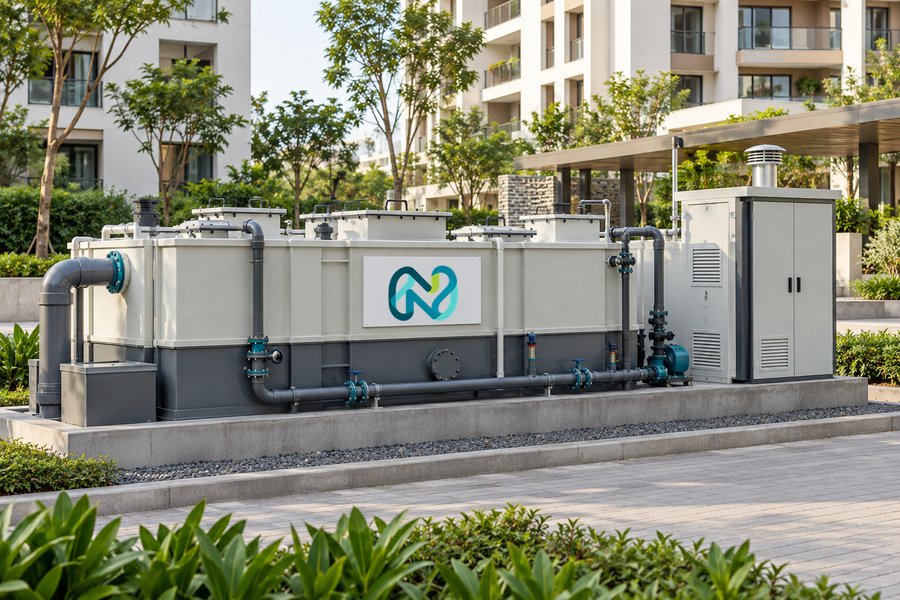
A packaged enclosure can reduce conventional site-built works and simplify transport and installation. Foundations, access and service connections still need planning.
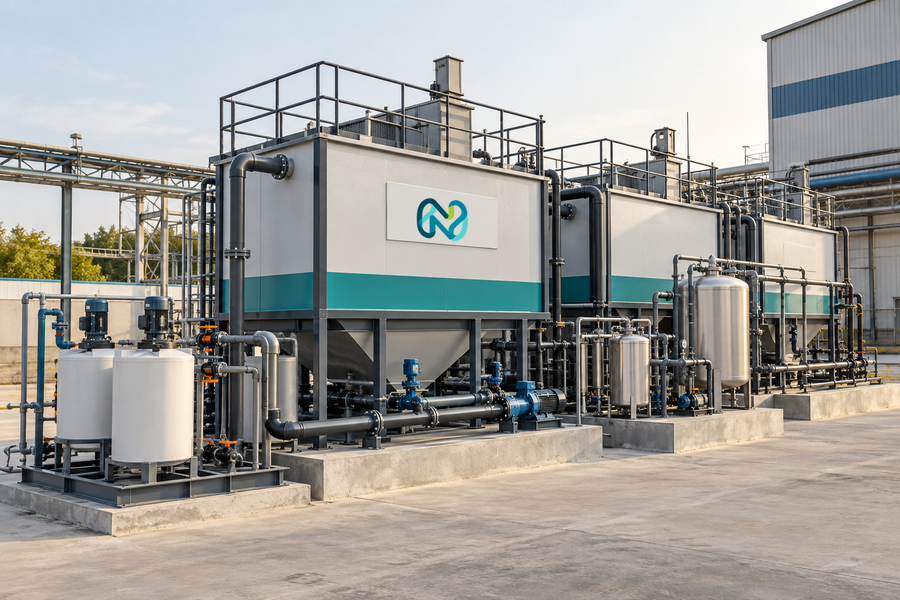
The source describes fiberglass and stainless-steel options, together with automated controls. Corrosion conditions and operating requirements govern the final specification.
INDICATIVE MANUFACTURER DESIGN VALUES
| Parameter | Indicative influent | Indicative effluent |
|---|---|---|
| pH | 6–9 | 6–9 |
| COD | < 500 mg/L | < 50 mg/L |
| BOD | ≤ 300 mg/L | ≤ 10 mg/L |
| Suspended solids | ≤ 100 mg/L | ≤ 10 mg/L |
These catalog values are indicative manufacturer design values, not universal Nitaneer guarantees. Results depend on influent, sizing, membrane selection, operation and maintenance. The source references China’s GB 18918-2002; that reference does not establish compliance at an Indian installation. Capacity, configuration and applicable discharge or reuse requirements must be confirmed in a project-specific technical proposal.
Share the flow, wastewater analysis, site constraints and intended discharge or reuse objective.
DISCUSS YOUR PROJECT